


Dhul Hijjah 2026: Virtues and Deeds of the Best 10 Days of the Year
What is the Month of Dhul Hijjah?
The month of Dhul Hijjahis the twelfth and final month of the Islamic Hijri calendar. It is one of the four sacred months which Allah Almighty has honoured in the Holy Qur'an. The name of this month literally means "the month of Hajj," because it is the month in which the pilgrimage (Hajj) to Makkah is performed.
This great month combines the greatest rites of Islam: Hajj, the sacrificial offering (Qurbani), the prayer of Eid al-Adha, and the ten blessed days. It is a season of goodness, mercy, and forgiveness that comes only once a year, so seize it before it is too late.
Why are the First 10 Days of Dhul Hijjah the Best?
The best 10 days of the year are not merely passing days; rather, they are a magnificent opportunity to transform your life and earn rewards. Here is the evidence from the Qur'an and Sunnah:
Evidence from the Holy Qur'an
Allah Almighty swore an oath by them in Surah Al-Fajr:
"By the dawn, and by the ten nights" (Surah Al-Fajr 89:1-2)
The majority of commentators explain that the ten nights are the first ten nights of the month of Dhul Hijjah. The fact that Allah swears by something is proof of its greatness and nobility.
Evidence from the Prophetic Sunnah
The Prophet ﷺ said:
"There are no days in which righteous deeds are more beloved to Allah than these days" – meaning the ten days of Dhul Hijjah.
They asked: "Not even jihad for the sake of Allah?" He said: "Not even jihad for the sake of Allah, unless a man goes out with his self and his wealth and returns with none of that." (Narrated by Al-Bukhari)
How to Make the Most of the Month of Dhul Hijjah
Below is a set of the best deeds through which a Muslim can draw closer to Allah Almighty during the best 10 days of Dhul Hijjah 2026 – magnificent days in which rewards are multiplied and the doors of goodness and mercy are opened.
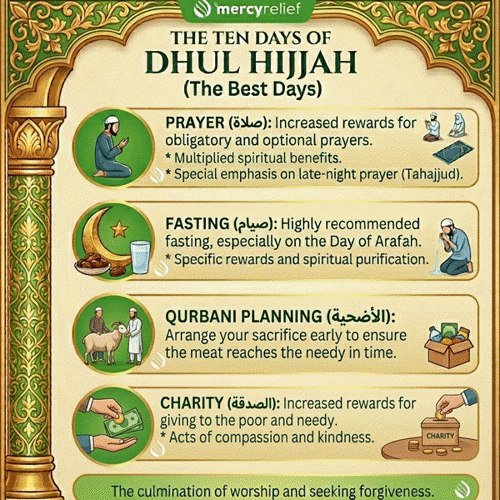
1. Increasing Charity and Acts of Kindness
Charity is among the greatest deeds by which a servant draws near to Allah, whether through financial donations such as supporting clean water projects, charitable bakeries, orphan sponsorship, providing food, or any beneficial service to people.
The Muslim gives charity seeking Allah's pleasure, without expecting any return or thanks from anyone, hoping for reward and recompense.
You can also support trustworthy charitable initiatives and organisations that help deliver aid to the poor and needy with honesty and transparency.
2. Offering the Sacrifice (Qurbani)
The sacrifice (Qurbani) is one of the greatest rites of Islam during Eid al-Adha, reviving the Sunnah of Prophet Ibrahim (peace be upon him) and an act of obedience to Allah Almighty.
It is recommended for those Muslims who are able to offer their sacrifice, then divide the meat into three parts:
-
One part for the family
-
One part for relatives and friends
-
One part for the poor and needy
You may also donate through trusted charities that distribute sacrificial meat to needy families in various regions.
How is the value of the sacrifice calculated?
The cost of Qurbani varies from one country to another depending on the type of livestock and local market prices. In some countries, the value of a Qurbani covers the price of a whole sheep, while in others it may represent one-seventh of a cow or camel.
It is good that a Muslim chooses what he can afford. If he is able to increase his contribution or offer more than one sacrifice, that is among the great doors of goodness and feeding the needy.
Mercy Relief UK provides the option to offer Qurbani to help the poor and needy in the countries we serve.
3.Increasing Prayer, Night Vigil (Qiyam al-Layl), Supplication, and Tahleel
The days of Dhul Hijjah are a great opportunity to increase prayer, maintain supererogatory (nawafil) prayers, pray Qiyam al-Layl, and Tahajjud prayer, as these bring closeness to Allah Almighty and tranquillity to the heart.
Night prayer (Qiyam al-Layl) is among the most beloved deeds to Allah, especially in these blessed days in which good deeds are multiplied.
In addition to remembrance (dhikr) and Tahleel, concerning which the Prophet ﷺ urged us to increase:
-
Takbeer: Allahu Akbar, Allahu Akbar, la ilaha illa Allah, Allahu Akbar wa lillahi al-hamd
-
Tahleel: La ilaha illa Allah
-
Tahmeed: Alhamdulillah
-
Tasbeeh: Subhanallah
4.Fasting During the First Ten Days of Dhul Hijjah
It is recommended to fast the first nine days of Dhul Hijjah because of their great virtue and immense reward, especially fasting on the Day of Arafah, by which Allah expiates the sins of the previous year and the coming year for the one not performing Hajj.
Fasting in these days is among the best deeds that help a Muslim purify his soul, increase in piety, and strengthen his connection to Allah Almighty.
When does the Month of Dhul Hijjah 2026 (1447 AH) begin?
-
Start of the first day of the ten days of Dhul Hijjah: 18 May 2026
-
Day of Arafah (9th of Dhul Hijjah): 26 May 2026
-
Blessed Eid al-Adha (10th of Dhul Hijjah): 27 May 2026
Hajj 2026: An Unforgettable Spiritual Journey
Hajj is the fifth pillar of Islam, a great obligatory duty that Allah Almighty has enjoined once in a lifetime upon every able and capable Muslim. It is a unique spiritual journey that combines worship, humility, and complete devotion to Allah Almighty.
The Hajj rituals for 2026 are expected to take place during the period from 25 to 30 May, as millions of Muslims from around the world converge on Makkah to perform this blessed rite.
Hajj reaches its peak on the Day of Arafah, corresponding to 26 May 2026, which is the greatest day of the year and one of the most virtuous and merciful. On this day, pilgrims stand on the plain of Arafah, humbly supplicating to Allah with prayers and seeking forgiveness.
Eid al-Adha 2026: A Festival of Obedience and Sacrifice
On this Eid, Muslims revive the tradition of the sacrifice (Qurbani) following the example of Prophet Ibrahim (peace be upon him). They also strive to bring joy to needy families by giving charity, distributing sacrificial meat, and sharing blessings with the poor and needy.
Eid al-Adha represents a great opportunity to strengthen the values of mercy, mutual support, and maintaining family ties, spreading happiness among Muslim families and communities worldwide.
Qurbani (Sacrifice): Reviving the Sunnah of Prophet Ibrahim
The story of Qurbani is the story of Prophet Ibrahim (peace be upon him) when Allah commanded him to sacrifice his son Ishmael. They both submitted to Allah's command, and Allah ransomed him with a great sacrifice. From that day, Allah ordained Qurbani for Muslims.
Rulings of Qurbani in Brief
- Who is it obligatory upon? Every able, adult, sane Muslim.
-
Etiquette for the one offering the sacrifice: It is recommended for the one intending to offer Qurbani not to cut their nails or hair from the first day of Dhul Hijjah until the sacrifice is done. In the Hanbali school of thought, cutting hair and nails is prohibited.
-
Its timing: After the Eid al-Adha prayer until sunset on the 13th day of Dhul Hijjah.
The Role of Mercy Relief UK in Qurbani
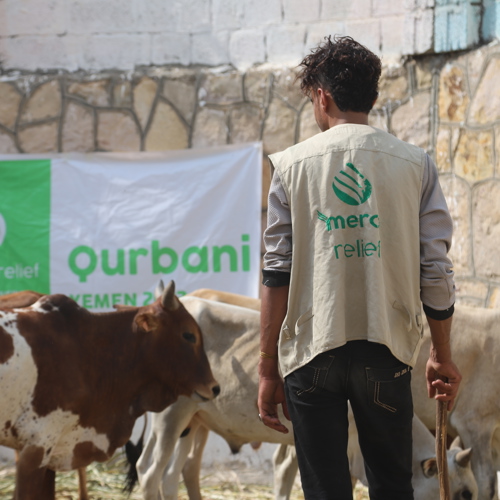
At Mercy Relief UK, we believe that the joy of Eid must reach everyone. By donating your Qurbani through our website, you can bring happiness to the hearts of needy families in Yemen, Gaza, Sudan, Bangladesh, India, and Somalia. Our team ensures that the Qurbani reaches its deserving recipients in the best possible manner.
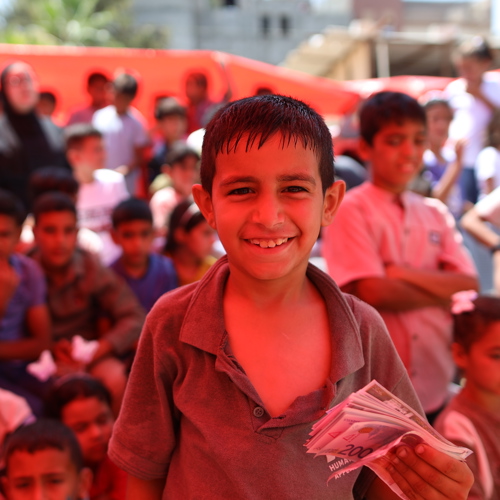
"Share the joy of Eid with needy families. Your Qurbani enriches the table of a needy child this Eid."
How to Plan and Make the Most of the First Ten Days of Dhul Hijjah? (Practical Plan)
First: A Brief and Easy Worship Schedule
-
Fajr: Pray Fajr + morning adhkar + 10 minutes of Qur'an
-
During travel or work: Takbeer, dhikr, and seeking forgiveness (istighfar)
-
Dhuhr: Maintain prayer on time + a short supplication
-
Asr: A small charity or a message to uphold family ties
-
Maghrib: Read one or two pages of Qur'an
-
Isha: Witr prayer + supplication + bedtime adhkar
Second: A Suitable Programme for Employees or Busy People
If your time is extremely tight, focus on these "golden deeds":
Daily:
-
Maintain the obligatory prayers – this is the greatest act of worship.
-
Read one page of Qur'an daily in just 10 minutes.
-
Give charity, even a small amount, or share some goodness.
-
Pray Witr before sleeping, even just one rak'ah.
-
Easy dhikr throughout the day.
Repeat often:
-
Subhanallah
-
Alhamdulillah
-
La ilaha illa Allah
-
Allahu Akbar
-
Astaghfirullah
Especially during:
-
Driving
-
Waiting
-
Routine work
Third: A Family Programme for the First Ten Days of Dhul Hijjah
The goal is not quantity, but for the household to experience the atmosphere of the ten days of Dhul Hijjah with love and joy.
For children – simple daily deeds:
-
Memorise the Eid takbeer
-
Say Tasbeeh 10 times
-
Give a small charity
-
Listen to a short story about the prophets or Hajj
For adults – each day:
-
Group Qur'an reading for 10 minutes
-
Collective dhikr after prayer
-
Supplication for the family
-
Participate in a charitable deed
Fourth: Beautiful Ideas at Home for the Ten Days
-
Play the takbeerat softly in the home.
-
Hang a paper reading: "Our Goal in the Ten Days" or a reminder of takbeer and tasbeeh.
-
Prepare a charity box for the family.
-
Donate to charity.
-
Set aside a daily supplication for the family.
-
Send a kind message to a relative or friend every day.
Fifth: A Very Light Plan for Those Who Feel They Are Falling Short
If you are tired or extremely busy:
• Your prayers on time
• Frequent istighfar (seeking forgiveness)
• Takbeerat
• Sincere supplication
• Fasting on the Day of Arafah if you are able
• Sadaqah jariyah
• This alone is tremendous goodness, by Allah's will.
Takbeerat of the Ten Days of Dhul Hijjah:
Repeat often:
Allahu Akbar, Allahu Akbar, la ilaha illa Allah, wa Allahu Akbar, Allahu Akbar wa lillahi al-hamd.
Or:
Allahu Akbar kabeera, walhamdulillahi katheera, wa subhanallahi bukratan wa aseela.
You can say them at home, in the car, at work, or while walking.
Frequently Asked Questions about the Ten Days of Dhul Hijjah
Q1: What is the Day of Arafah?
A1: The Day of Arafah is the ninth day of the month of Dhul Hijjah. It is one of the greatest days of Islam and the most important day of Hajj. On this day, pilgrims stand on the plain of Mount Arafah, humbly supplicating to Allah with prayers, seeking forgiveness, mercy, and pardon. It is an essential pillar of Hajj.
Q2: When does the month of Dhul Hijjah 2026 begin?
A2: The first day of the month of Dhul Hijjah for 2026 is expected to be Monday, 18 May, depending on the sighting of the crescent moon of Dhul Qa'dah on the 29th day of that month.
Q3: Is fasting the ten days of Dhul Hijjah obligatory?
A3: No, fasting the ten days of Dhul Hijjah is not obligatory; rather, it is a highly recommended supererogatory act (sunnah) with immense virtue. As for the tenth day (the day of Eid), fasting is strictly forbidden.
Q4: When does the restricted takbeer (after obligatory prayers) begin?
A4: The restricted takbeer begins from Fajr on the Day of Arafah (the 9th of Dhul Hijjah) until Asr on the 13th day of Dhul Hijjah (the days of Tashreeq).
Q5: Why does the date of Dhul Hijjah change every year?
A5: The Islamic calendar is based on the lunar cycle, so it is about 10 to 11 days shorter than the Gregorian calendar. For this reason, Islamic occasions move earlier each year within the Gregorian calendar.
"Do not miss the opportunity to multiply your rewards. Your donation today means ongoing charity (sadaqah jariyah) and joy for a needy family."